apDia Platelet Screening and Identification
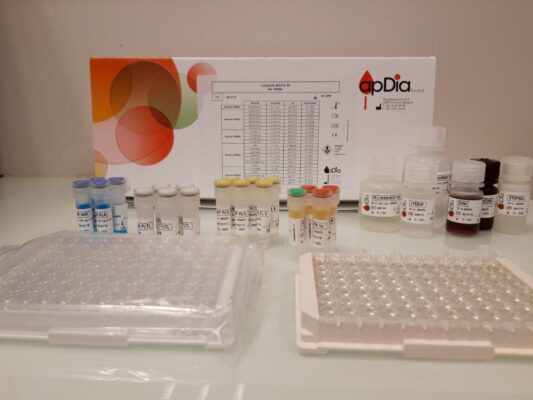
apDia screening cells for the detection of antiplatelet antibodies and identification panel cells are manufactured using a special, patented process. The standardized screening panel enables sensitive detection of HPA antibodies, while the identification panel provides a reliable means of accurately identifying them.
These reagents significantly facilitate the standardization, handling, and organization of laboratory procedures in platelet immunology. The use of well-characterized platelets allows for the standardization of the MAIPA method: apDia platelet reagents enable the long-term use of typed cells expressing even rare antigen combinations, such as HPA-1 (a-, b+) [2.5%] and HPA-5 (a-, b+) (less than 1%).
The detection and identification of allo- or autoantibodies against platelets is essential for the targeted diagnosis and treatment of the four main clinical conditions in the field of platelet immunology:
- FNAIT—fetal and neonatal alloimmune thrombocytopenia,
- PTP—post-transfusion purpura,
- PR – refractoriness to platelet transfusion,
- ITP—immune thrombocytopenia.
In transfusion medicine, the accurate identification of platelet antibodies is a key prerequisite for the proper selection of a treatment regimen and the safe administration of platelet transfusions.
ANTIBODIES AGAINST PLATELETS CAUSE FOUR CLINICAL DISORDERS
Fetal and Neonatal Autoimmune Thrombocytopenia (FNAIT)
FNAIT can occur during pregnancy when the mother is immunized against allogeneic antigens present on fetal platelets. This can happen when fetal platelet antigens inherited from the father differ from the mother’s platelet antigens and are not present on her platelets. As a result of this immunization, the mother produces IgG alloantibodies against the paternal platelet antigens, which are then transferred via a mechanism mediated by the neonatal Fc receptor (FcRn) across the placenta into the fetal circulation. Maternal alloantibodies can bind to fetal platelets and cause immune-mediated destruction of platelets in utero.
Consequential fetal thrombocytopenia can lead to bruising, (intracranial) hemorrhage with possible neurological damage, or even death in severe cases. In the Caucasian population, FNAIT is most commonly associated with anti-HPA-1a antibodies (approximately 85–90% of cases) and, to a lesser extent, with anti-HPA-5b antibodies.
Post-transfusion purpura (PTP)
PTP is a rare transfusion reaction that can develop within two weeks after a transfusion of any blood product containing platelets (e.g., red blood cell concentrates) and can manifest as severe thrombocytopenia complicated by bleeding and hemorrhage, which can sometimes be life-threatening.
It most commonly occurs in middle-aged women who have given birth multiple times. All patients were previously sensitized to HPA alloantigens that they themselves do not possess, either during a previous pregnancy or through a blood transfusion. The clinical presentation of PTP is then mediated by an antibody response against these platelet alloantigens upon a second exposure (resensitization) to incompatible transfused platelets carrying the relevant HPA antigen(s).
As a result, the transfused platelets are destroyed by the allopantibodies produced, causing a sudden drop in platelet count. Most commonly, this involves the HPA-1a antibody, which is produced by patients/recipients who are HPA-1bb. Paradoxically, the patient’s own platelets are also destroyed at the same time through a mechanism that has not yet been fully elucidated.
PTP is considered a self-limiting condition, with platelet counts returning to normal in approximately 20 days. Treatment with IVIG (intravenous immunoglobulin) is considered the most optimal first-line therapy.
Platelet Refractoriness (PR)
PR is defined as a condition in which there is an insufficient increase in platelet count following a transfusion of random platelets from a donor with the same ABO blood type. It is a common complication in patients who undergo repeated platelet transfusions.
This clinical condition can develop when patients are immunized against HLA class I antigens and produce anti-HLA antibodies, leading to febrile, nonhemolytic transfusion reactions. Some patients may also develop anti-HPA antibodies, with anti-HPA-5b being the most common specificity.
Because immunized patients often have antibodies against various HLA class I antigens, it can be difficult to find compatible platelets for transfusion.
Immune Thrombocytopenia (ITP)
ITP is also known as idiopathic thrombocytopenic purpura. It is an autoimmune disease characterized by immune-mediated destruction of platelets and inhibition of their production.
Affected patients produce autoantibodies that destroy their own (autologous) platelets. In most cases, these are autoantibodies directed against the GPIIb/IIIa and GPIb/IX glycoprotein complexes on platelets.
In children, ITP may develop following a viral infection and usually resolves without treatment. In adults, the disease may be triggered by HIV infection, hepatitis, or the bacterium Helicobacter pylori, and it can be a chronic condition.